

Client Overview
Amazfit, a leading global smart wearable brand, focuses on health, fitness, and innovative smart technology. Launched in 2015, Amazfit has a presence in over 90 countries and is recognized for award-winning smartwatches and bands, integrating fashion with advanced health technology to provide 24/7 actionable insights.
Challenges Faced by Amazfit (April–September 2025)
1. Balancing Spend Across Campaigns
Ensuring an optimal mix between Prospect and Retarget campaigns to drive new customer acquisition while maximizing conversions from existing customers.
2. Keyword Visibility & Optimization
Identifying and leveraging high-converting keywords with low Share of Voice (SOV), mapping missing opportunities, and optimizing match types to maintain visibility across seasonal, category, and product-driven keywords.
3. Competitive Pressure & Brand Defense
Securing prime placements amid a highly competitive landscape, defending key keywords, and preventing competitors from capturing top visibility.
4. Performance Tracking & Campaign Management
Monitoring full-funnel metrics (Impressions → Clicks → CTR → CPC → CVR) in real time, avoiding budget overruns, and at the same time scaling efficiently.
5. Inventory & Offers Management
Ensuring sufficient inventory for bestsellers, coordinating extra coupons and deals for sales, and addressing potential payment issues to prevent campaign disruption.
Amazon Marketing Strategy & Execution
1. Optimised Campaign Structure
- Balanced Prospect and Retarget campaigns to maximise reach and conversions across targeting types.
- a. In Prospect, maximum contribution came from keyword-based campaigns, followed by Automatic, competition & category targeting. This helped capture greater market share and drive incremental visibility.
- In Retarget, maximum contribution from keywords followed by product defence & audience targeting worked for the brand. It helped in dominating top-performing segments.
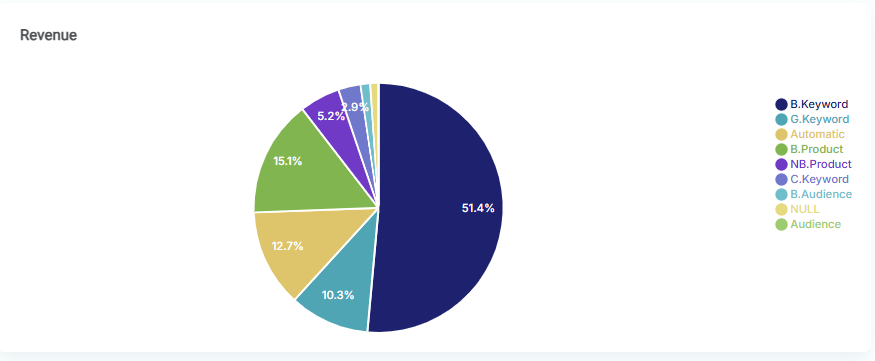
- Focus more on keyword-based strategy in Sep versus product-based across Prospect & retarget, led to scale-up
- Leveraged DSP and Amazon Marketing Cloud audience cohorts to capitalise high-intent audience funnel.
2. Keyword & Search Term Optimisation
- Conducted detailed keyword analysis to identify high-converting, low-SOV keywords.
- Mapped missing keyword opportunities and refined match types (Exact, Phrase, Broad, Broad Modifier) based on historical performance.
- Focused on seasonal, category, and product-driven keywords to capture market demand.
3. Targeted Ad Formats & Match type Performance
- Used Sponsored Products (SP), Sponsored Brands (SB), and Sponsored Display (SD) strategically to capture different audience segments. This helped maintain focus on high-performing campaigns and drive new-to-brand customer acquisition across various targeting types.
- Contribution strengthened across match types, with Exact leading, followed by Product and Phrase targeting, ensuring high intent coverage & efficiency.
- Identified winning keywords & targeted them specifically via exact matchtype.
4. Targeted Placements
- Optimized Top of Search (TOS), Product Detail Page (PDP), and SB placements based on traffic trends.
- Top of Search (TOS) contributed 57.6% of revenue, with CTR above 4% & highest ROI, particularly in SP ads.
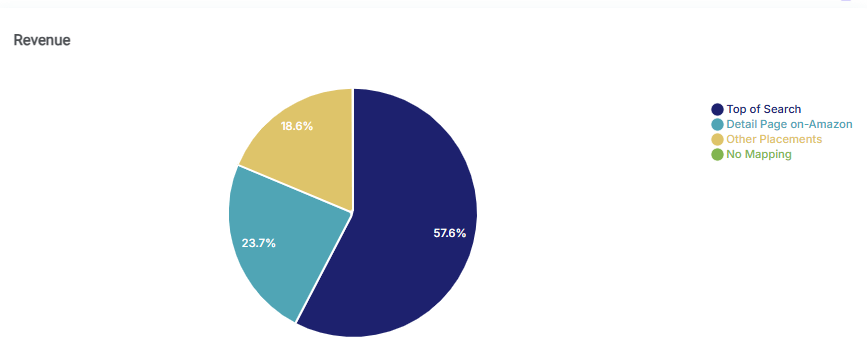
- Product Detail Page (PDP) and other placements supported overall campaign performance with balanced CPC and CTR.
- Adjusted bids dynamically across placements to maximize visibility during peak traffic windows.
5. Competition & Brand Defense
- Monitored competitor activity across competing brands to protect prime placements.
- Ran product defense campaigns to maintain dominance on high-converting keywords – both generic as well as retarget.
- Executed cross-category campaigns to capture alternate purchase
6. Optimized Category & Product portfolio mix
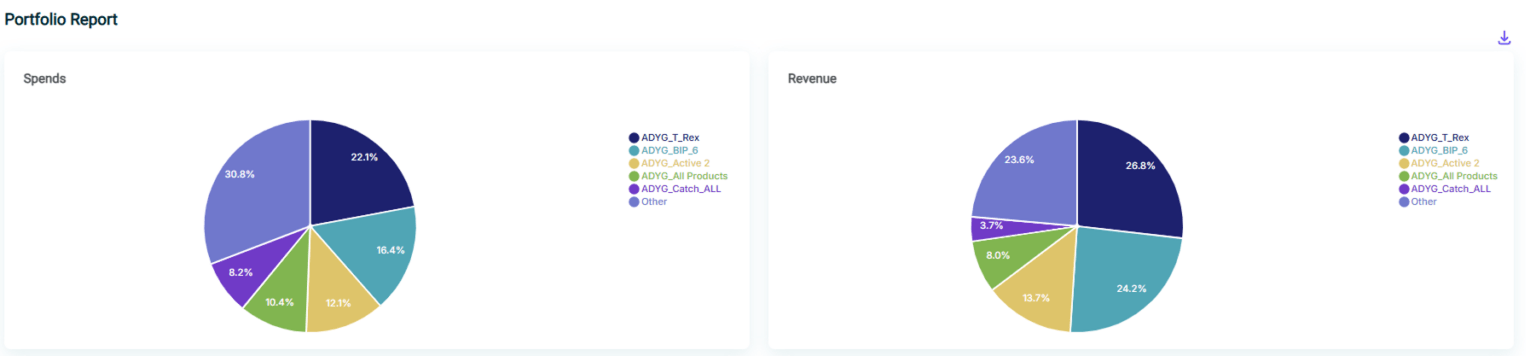
- In September, Portfolio distribution evolved with higher efficiency, showing increased contribution from top-performing campaign groups.
- Revenue share strengthened across leading portfolios, highlighting improved targeting precision and stronger keyword funnels.
7. Automated Monitoring & Optimization
- Implemented automated reporting and bulk bid adjustments to manage spends in real time.
- Performed active negations in auto campaigns to control budget leakage.
- Continuously refined campaigns based on search trends, CTR, CPC, and CVR metrics.
8. Inventory & Offer Management
- Coordinated inventory planning to ensure sufficient stock for high-demand products.
- Highlighted coupons, deals, and offers to enhance visibility during sales.
- Ensured checks on wallet and payment management to prevent campaign interruptions.
9. Competition & Category Insights
- Collaborated with Amazon category teams for insights and trend-based optimization.
- Incorporated insights about category & competition at product level from Amazon Pie to enhance relevance and discoverability.
- Ensured all seasonal, category, and product information was clearly highlighted in listings.
Results (April – September 2025) :-
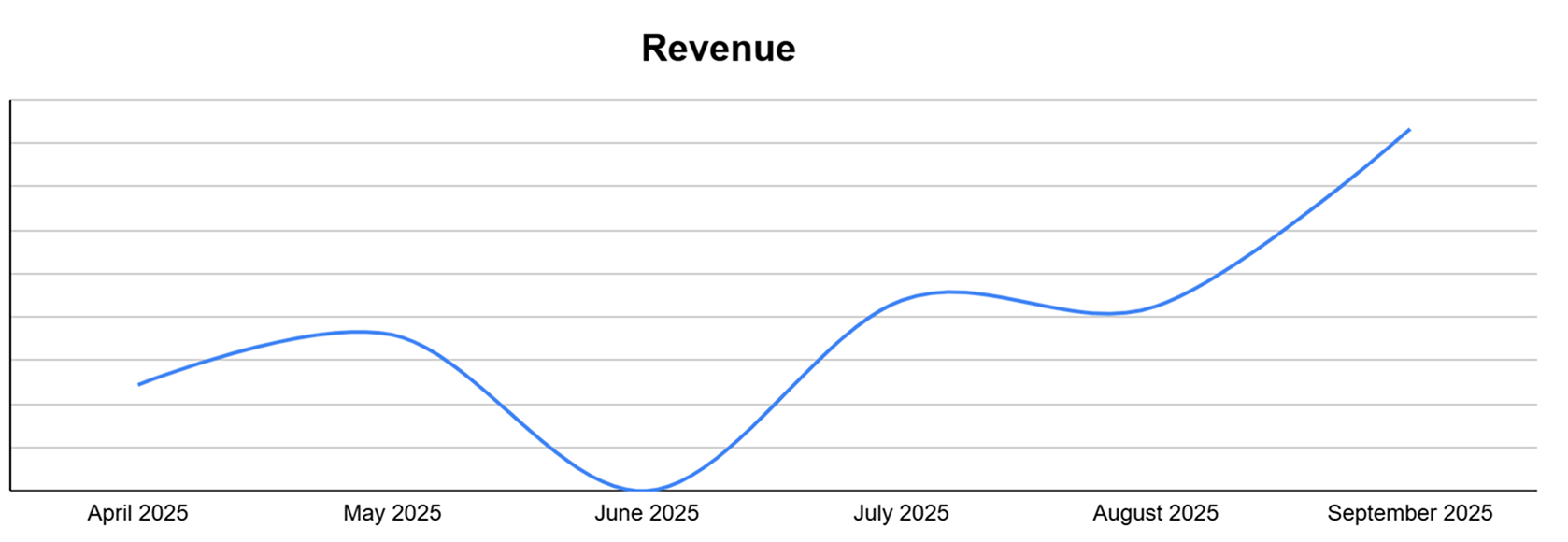
1. Performance: Achieved 267% growth in orders and 241% growth in revenue
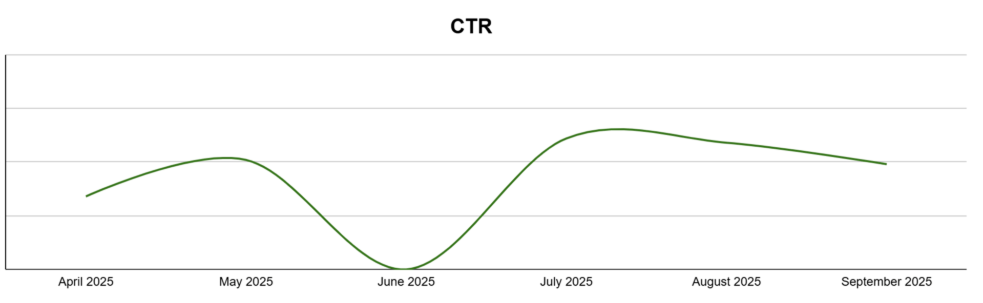
2. Improved Click-Through Rate (CTR) by 44%
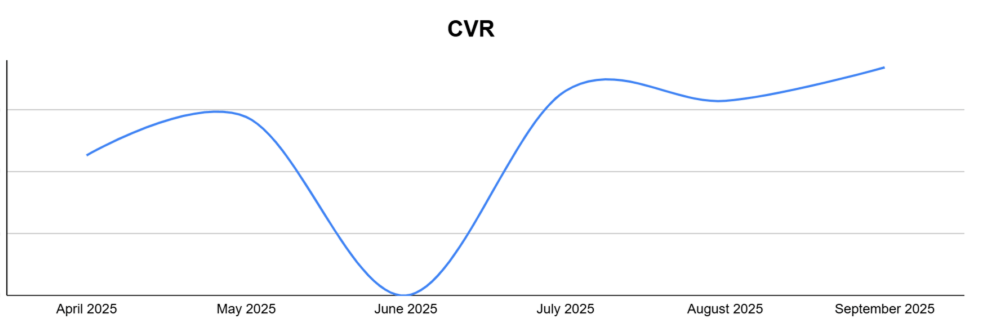
3. Improved Conversion Rate (CVR) by 63%
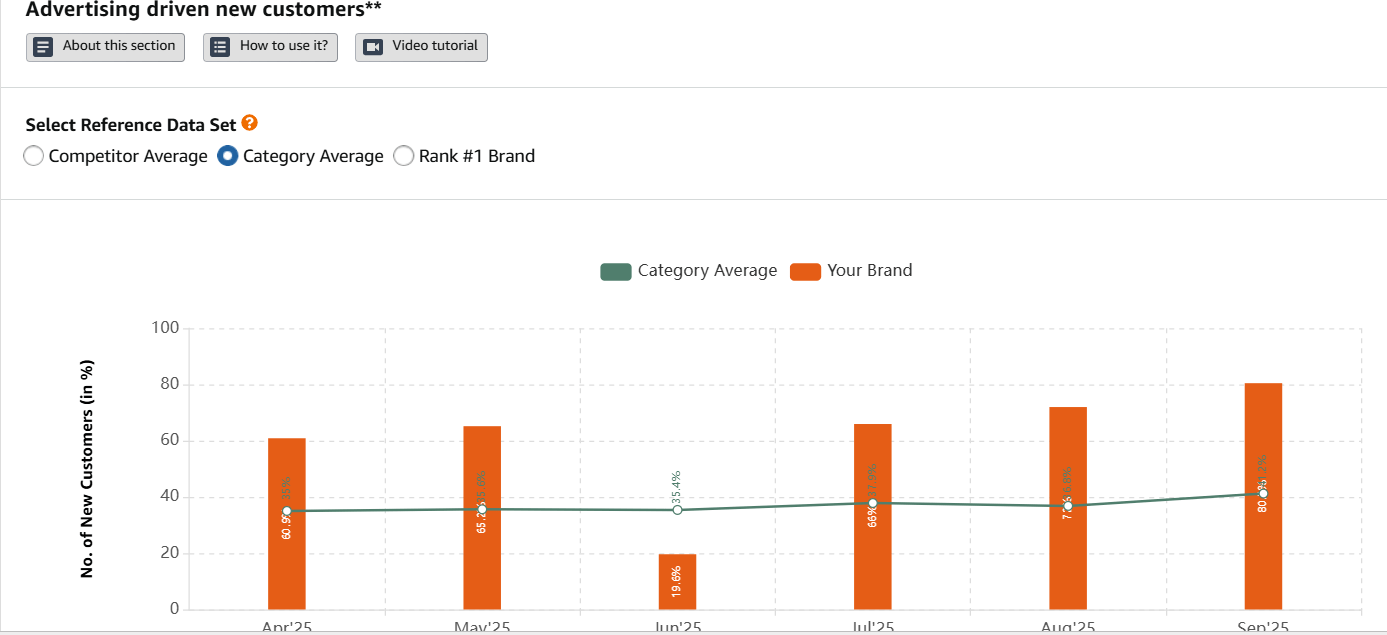
4. Improved new to brand share vs. category benchmarks
- Brand’s new-customer share stayed well above the category benchmark of 35–41%, showing stronger acquisition efficiency.
- Advertising-driven new customers increased from 60% to 80%, surpassing category growth from 35% to 41%.
5 . Search Interest Growth
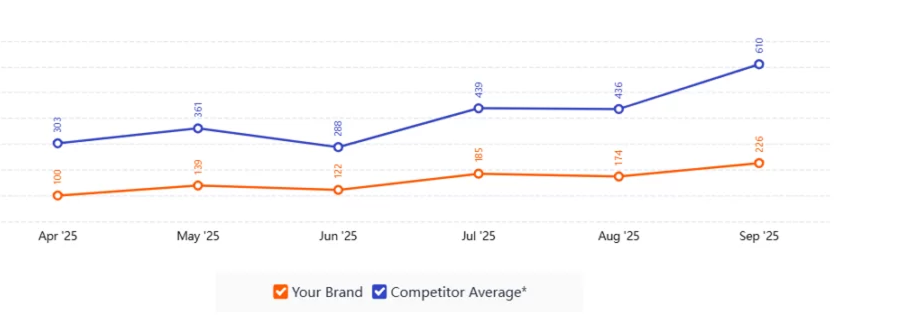
Indexed searches for Amazfit almost doubled over a span of 6 months, outpacing competitor averages and signalling stronger search visibility and rising brand demand.
6. Glance Views & Share of Voice
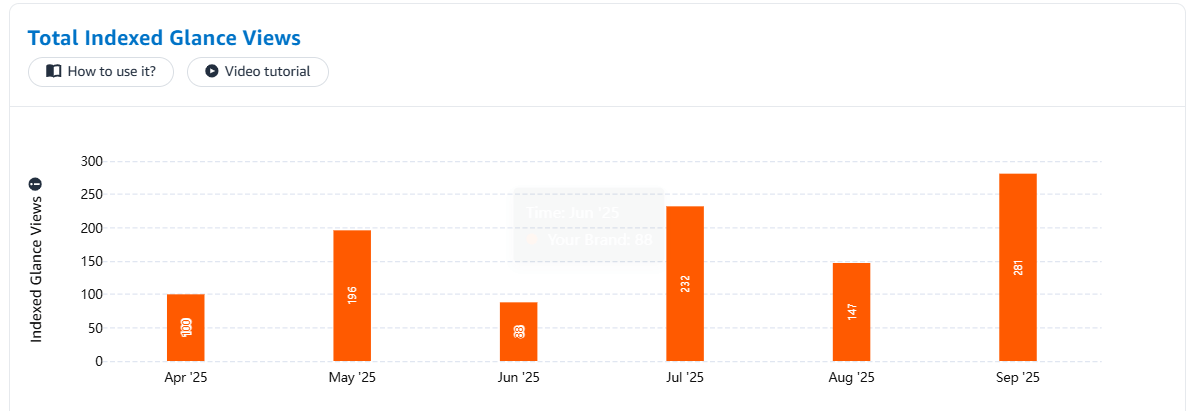
Total indexed GVs increased 2.8 times for the brand, indicating stronger product visibility and improved placement efficiency across the platform.
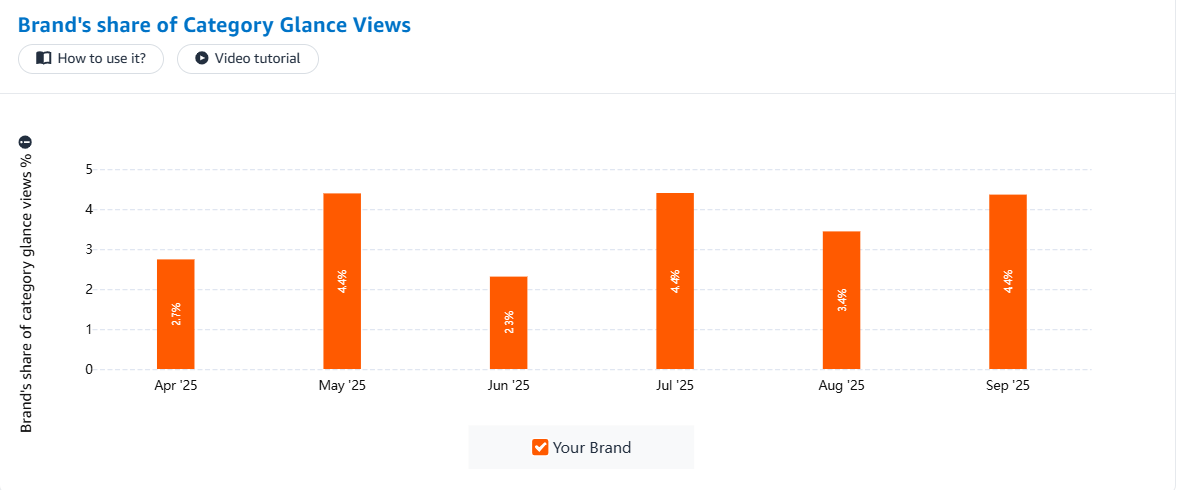
- Amazfit’s share of category glance views tripled, delivering faster growth than similar brands and clearly reflecting stronger visibility and ad presence.
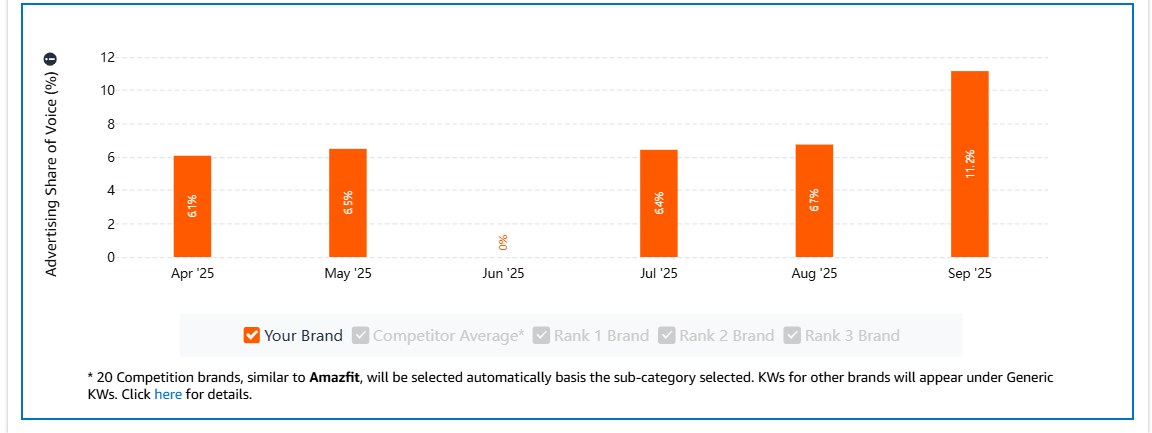
- The Advertising share of voice also increased from 6.1% to 11.2% from Apr to Sep’25.
Key Takeaways:-
- Data-Driven Targeting – Optimized keywords and audience targeting improved campaign engagement and conversions.
- SP Ads Dominance – Sponsored Products drove the highest revenue and strengthened new-customer acquisition.
- Top of Search Focus – TOS placements contributed the majority of revenue and delivered the highest CTR performance.
- Share of Voice Growth – Doubled SOV increased visibility, brand recall, and market presence.
- Customer Acquisition Success – Advertising-driven new customers grew from 60% to 80% efficiently.